At a Glance This essay explores the chilling intersection of Sartrean existentialism and Aldous Huxley’s Brave New World, arguing that the World State represents the “neutralization” of human freedom rather than its mere destruction. By examining the biological silencing of the soul, the dissolution of the self through the “Universal Look,” and Mustapha Mond’s parasitic…
Category: Philosophical Logic
Explores ethics, epistemology, existentialism, and the logical frameworks authors use to build their worlds.
Example Post Ideas
The ethics of artificial intelligence in contemporary sci-fi; Existentialism and choice in crime literature.
The Archive of Eradication: Why Dracula’s Filing Cabinet is Scarier than his Fangs
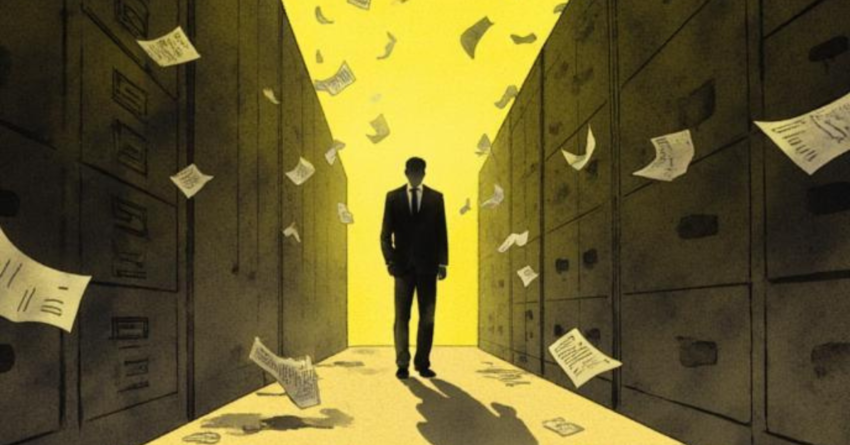
At Glance In the world of Dracula, the filing cabinet is more formidable than the vampire’s fang. This deep dive deconstructs the “moral laundering” used by the Crew of Light to reframe ritualized execution as necessary medical care, revealing the chilling ways modern bureaucracy erases ethical residue to keep the record clean.
Addie LaRue and Albert Camus: Metaphysical Insolvency & The Absurd
A short version of this essay is available as a Spotify podcast. Check here. At a Glance In the second audit, we analyze the collapse of Luc’s monopoly through the lens of Albert Camus’s Absurdism, reframing Henry Strauss not as a savior, but as the “Black Swan” event that triggers a systemic liquidity crisis. By…
The Invisible Ledger: Existentialism, Memory, and Power in Addie LaRue
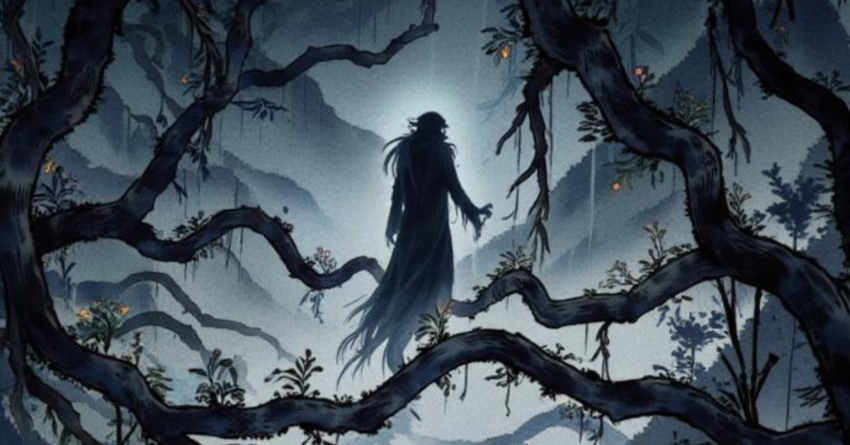
A short version of this essay is available as a Spotify podcast. Check here. literature and philosophy analysis on The Invisible Life of Addie LaRue At a Glance This blog audits the metaphysical system of The Invisible Life of Addie LaRue, reframing her curse as a bureaucratic “Terms-of-Service” agreement managed by Luc, the cosmic accountant….
Kafka’s The Trial and Hannah Arendt: Law Without Justice
A short version of this essay is available as a Spotify podcast. Check here. At a Glance Kafka’s The Trial is not a nightmare of corrupt judges, but a chilling preview of authority emptied of thought, where law outlives justice and procedure replaces conscience. Through the lens of Hannah Arendt, this essay explores how Josef…
Red Rising Existentialist Analysis: the Architecture of the Reaper
A short version of this essay is available as a Spotify podcast. Check here. At a Glance The tragedy of Darrow’s ascent in Red Rising is not that he finds his true self, but that he strategically narrows his humanity to become a functionally sufficient weapon. By trading the radical freedom of his “Red” facticity…
Why Gregor Samsa Cannot Be an Absurd Hero: Kafka’s Iron Cage Explained
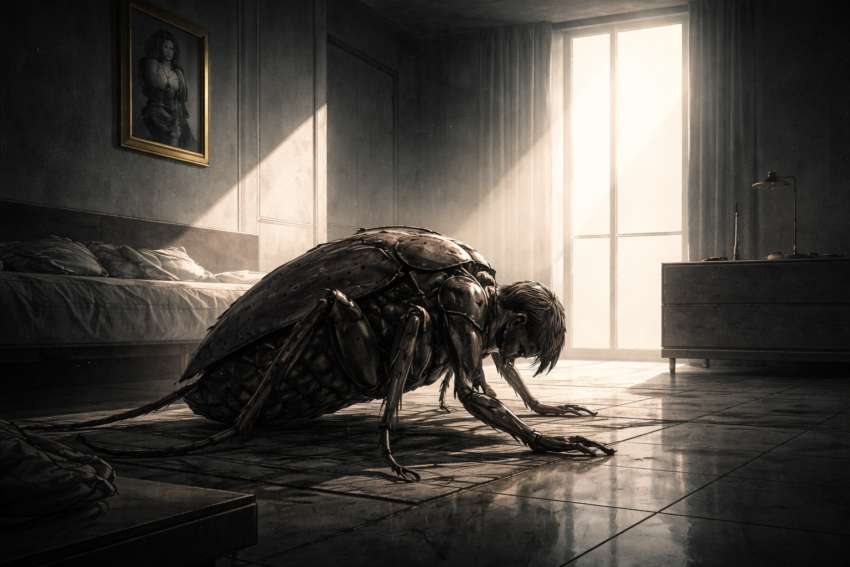
Introduction Franz Kafka’s The Metamorphosis opens with the rattle of steel. An alarm clock—mechanical, punctual, and disciplinary—jolts Gregor Samsa into an obligation his body can no longer fulfill. Even as he realizes he is trapped within a hardened, chitinous, and alien shell, his first instinct is to answer the call of the office, attempting to…
If Meaning is Not Given, It Must Be Carried
At a Glance In a world optimized for effortless comfort, Guy Montag’s journey represents an “existential mutation” from a numbed functionary into a responsible subject. By rejecting the “White Noise” of a summary-driven society, he discovers that meaning is not a gift to be received, but a metabolic weight that must be painfully carried and…
Atticus Finch: The Quiet Absurd Hero of Maycomb
Introduction Atticus Finch is a man of quiet habits, raising two children in the American South of the 1930s—a landscape where racial discrimination was not merely a social custom but a structural pillar of the legal system. In Maycomb, Alabama, systemic injustice is treated as an atmospheric fact: normal, unquestioned, and inevitable. Against this backdrop,…
The Mule as an Absurd Misfire
Introduction What happens when the most fragile man in the galaxy becomes the only one strong enough to break its destiny? That is the paradox at the heart of the Mule: a figure so unlikely, so unheroic in appearance, that his rise feels like a cosmic joke with teeth. Asimov paints him with intentional awkwardness:…