~Mapping Power Structures inside The Name of the Rose
When I first reread The Name of the Rose, I approached the medieval Church with a very modern assumption. I imagined a simple hierarchy: corrupt authorities at the top, obedient monks below, and a giant institutional machine driven mostly by money and power.
But the deeper I went into the world behind the novel, the more unstable that assumption became. Then I remembered that, in Theaetetus, Plato discussed perception as a form of knowledge shaped by what we already know or have experienced. Since my own understanding of medieval history and Church systems was limited, I decided to investigate further.
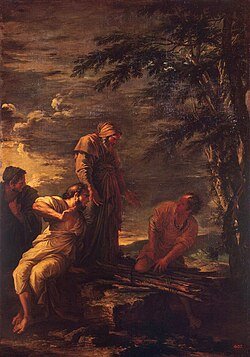
“Man is the measure of all things,” and argued that knowledge was obtained from the senses. This is a famous fragment from the Greek sophist Protagoras, which is widely debated by Plato in the Theaetetus.
What I discovered was far more complicated and much more intellectually interesting. The medieval Church in Eco’s world was not a single unified machine. It functioned more like a civilization-wide operating system built from overlapping power structures, competing intellectual traditions, and fragile systems of authority. Suddenly, The Name of the Rose no longer felt like merely “a murder mystery in a monastery.” It began to feel like a battlefield over who has the right to define truth.
The Abbey Exists Inside Two Different Power Systems
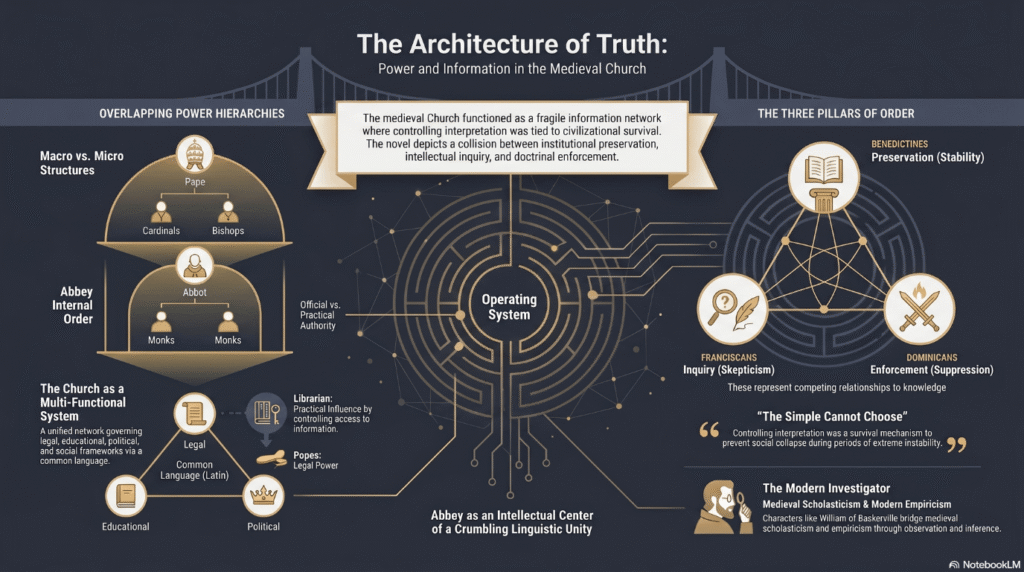
One of the biggest breakthroughs for me was realizing that the monastery and the Church hierarchy operate under different structures while still existing within the same broader authority. There are actually two overlapping systems functioning simultaneously.
The Macro Structure: The Institutional Church
Outside the abbey exists the large-scale hierarchy of medieval Western Christianity:
- Pope
- Cardinals
- Archbishops
- Bishops
This structure governs doctrine, regional authority, and political influence throughout Latin Christendom. The Pope is not simply a religious figure in this world. He is tied to diplomacy, political legitimacy, intellectual authority, and social order itself.
The Micro Structure: The Monastic Order
Inside the abbey, another hierarchy operates:
- Abbot
- Prior
- Librarian
- Monks
- Novices
The abbey belongs to the Church, yet it also protects its own internal order. This creates immediate tension. A bishop may seek control over doctrine and obedience at the institutional level, while an abbot may insist the monastery governs itself. A librarian may quietly possess more practical influence than either because he controls access to knowledge.
Interestingly, this dynamic reminded me somewhat of modern American federal and state systems, where overlapping jurisdictions create ongoing friction over authority.
Discovering these layered hierarchies changed the way I viewed the novel. I began to realize that solving the mystery requires understanding who truly possesses practical influence. At first, I mistakenly assumed Jorge, the librarian, was effectively the highest authority in the abbey because his presence felt overwhelming.
Now I see that Eco intentionally blurs the distinction between official authority and practical authority. That distinction becomes one of the novel’s central tensions. This is something I need to keep in mind.
The Medieval Church Was Also an Educational System
Another misconception I had was imagining the medieval Church purely as a religious institution. The more I researched, however, the more I realized the Church functioned simultaneously as:
- a religious authority
- an educational system
- a legal structure
- a political institution
- a social framework
- an intellectual network
Latin itself functioned almost like a civilization-wide operating language. I found this especially fascinating. I suspect Charlemagne played a major role in shaping this linguistic unity, though I still want to research this area more deeply.
Whenever tensions arise between regional authority and institutional authority, fragmentation often follows. Languages separate. Religious traditions divide. Political systems shift.
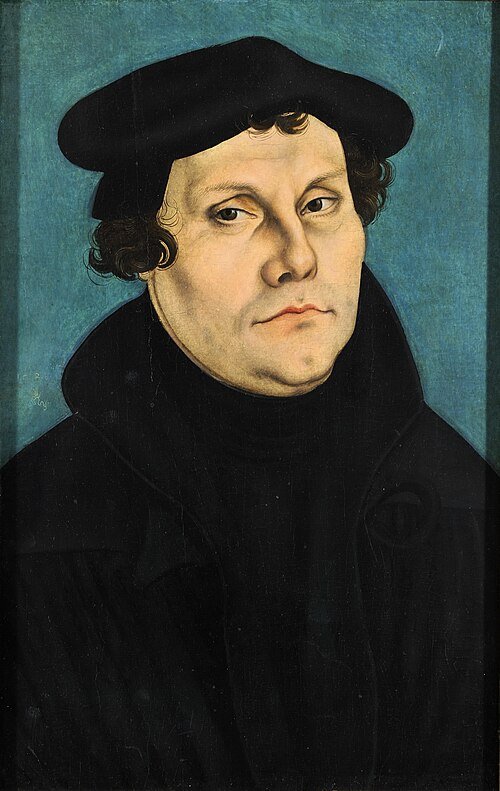
Eventually, reformers such as Martin Luther and John Calvin emerged. Later thinkers, such as Immanuel Kant, began writing philosophy in German rather than Latin, signaling the slow weakening of this unified intellectual world.
Once I began viewing the Church through this broader lens, medieval fears surrounding heresy began to make much more sense. Questioning doctrine was not simply “having a different opinion.” It threatened the stability of the entire system. Voices are valuable until competing voices begin destabilizing society itself.
Eco’s Orders Are Symbolic Systems
One thing I completely underestimated was how carefully Eco selected the religious orders in the novel. They are not random background details. Each order represents a different relationship to truth, authority, and knowledge.
Benedictines: Preservation
The abbey itself belongs to the Benedictine tradition. Adso of Melk, the narrator of the book, is a Benedictine novice.
Their emphasis includes:
- stability
- prayer
- preservation
- scholarship
This perfectly matches the atmosphere of the library and manuscripts. The abbey feels ancient, disciplined, and structured because Benedictine identity is embedded in its architecture.
Franciscans: Inquiry and Poverty
William of Baskerville belongs to the Franciscan order. This became one of my most interesting discoveries because I originally assumed “Franciscan” simply meant humble monks.
By Eco’s period, however, the Franciscans were deeply divided over apostolic poverty and Church authority. William represents a more intellectual Franciscan tradition: disciplined, analytical, and skeptical of premature certainty.
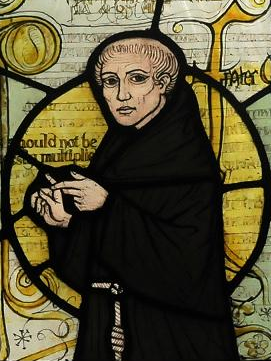
The moment I began reading about William of Ockham, Brother William suddenly made much more sense. Eco even references Ockham directly as William’s friend. Even the name “William” itself feels intentional, though that part is my own speculation.
Dominicans: Enforcement
Then there are the Dominicans.
In the novel, they are strongly associated with:
- doctrinal precision
- interrogation
- inquisitorial authority
- suppression of deviation
Eco is not simply arguing that “Dominicans are evil.” Historically, however, many inquisitors were Dominicans.
As a result, the novel becomes a collision between:
- preservation
- inquiry
- enforcement
Honestly, the inquisitors reminded me slightly of the Steel Inquisitors from Mistborn by Brandon Sanderson. Eco layers multiple historical conflicts between competing authorities, and the murders occur inside that intellectual collision.
William Feels Shockingly Modern
One thing that surprised me while reading was how modern William feels.
He investigates through:
- observation
- inference
- elimination
- probability
Eco intentionally blends medieval scholasticism with something resembling early empiricism and detective fiction. The reference to “Baskerville” is clearly a nod toward The Hound of the Baskervilles.
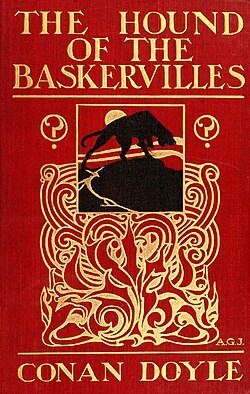
But beneath the literary joke lies something more serious.
The intellectual world of medieval Europe is beginning to strain under competing interpretations and institutional instability. William still belongs to the medieval world, yet he almost thinks like an early modern investigator. That tension makes him feel unusually alive as a character.
The Most Important Shift in My Thinking
The biggest shift for me personally was realizing that these structures were not built solely out of greed or corruption. There were also attempts to prevent social collapse.
That does not excuse everything done in the name of authority, but it complicates the picture considerably.
One passage from the novel stayed with me deeply:
“The simple cannot choose their personal heresy, Adso; they cling to the man preaching in their land…”1
That line changed how I thought about medieval fear. During periods of famine, instability, war, and weak literacy, radical movements could spread extremely quickly. In that world, controlling interpretation was not merely intellectual vanity. It was tied directly to survival.
I began to see the medieval Church less as a modern local church and more as a fragile information network struggling to maintain coherence amid an unstable civilization.
What I’m Investigating Next
The deeper I go into The Name of the Rose, the more I realize Eco constructed the novel almost like a labyrinth of interconnected systems.
My next research path will focus on:
- How medieval books were physically made
- Material of the Books: parchment, vellum, and linen production
- Why were books extraordinarily expensive
- How scarcity created intellectual power
- Why libraries functioned almost like controlled vaults of knowledge
Yes! Finally, I am investigating books.
Because the more I read Eco, the more I suspect the library is not simply a setting.
It may actually be the true political center of the novel.
Why This Blog Is Changing
Lately, I’ve been experimenting with different blogging styles. While I still plan to write more formal research-based essays inspired by my reading and discoveries, I also want to document the process itself: how I investigate a book, follow threads of curiosity, and gradually build understanding. Because of that, I’ve decided to leave more of my raw voice and thought process intact.
What often surprises me is how quickly one question leads to five more. After my initial reading, I usually create a list of topics to investigate further, but that list tends to expand the deeper I go.
At the moment, I still have many unanswered questions about medieval history and the various religious orders mentioned in the text. For now, though, I’m setting those aside temporarily so I can move on to another section of the book.
Notes
- Umberto Eco, The Name of the Rose, trans. Richard Dixon (Gruppo Editoriale, 1983; repr., HarperCollins Publisher, 2014), 214. ↩︎