Introduction
What happens when the most fragile man in the galaxy becomes the only one strong enough to break its destiny? That is the paradox at the heart of the Mule: a figure so unlikely, so unheroic in appearance, that his rise feels like a cosmic joke with teeth.
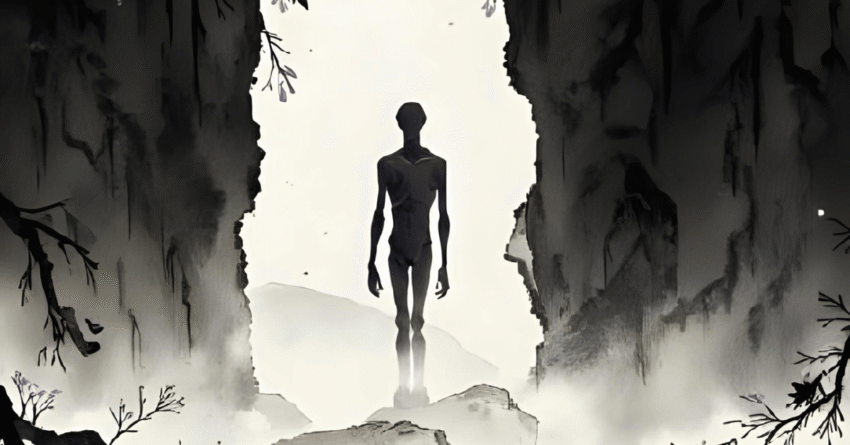
Asimov paints him with intentional awkwardness: tall and gaunt, with long, dangling arms and a nose too large for his face, marked by the general gracelessness of a clown. He looks like someone the universe has already dismissed. His body seems misassembled, as if nature muttered “good enough” and moved on1. This grotesque exterior mirrors the Nietzschean wound within: a life shaped by humiliation and the slow-burning resentment that follows.
Yet this improbable figure—known only as the Mule—is the single individual who slips the noose of psychohistory. He defies statistical determinism, bends the trajectory of empires, and forces even the Second Foundation to abandon its script. Physically weak but mentally overwhelming, he embodies a contradiction too potent to ignore.
This makes him the inverse of Camus’s Sisphus. Sisphus becomes heroic through conscious acceptance of fate: the Mule revolts out of emotional injury and unconscious resentment. Instead of confronting the absurd with lucidity, he imposes his damaged psychology onto the entire galaxy.
For this reason, the Mule is neither an Absurd Hero nor an Übermensch. He is an Absurd Misfire—a rebel driven not by freedom but by resentment, using power not to transcend meaninglessness but to enforce his own fragile version of meaning on everyone else.
The Absurd Hero: Camus’s Benchmark
Camus’s Absurd Hero: Sisyphus
In Camus’s view, the Absurd Hero is not a conqueror of fate but a lucid witness to it. He sees the world without illusions, understands that it offers no higher meaning, and still chooses to live with intensity. In The Myth of Sisyphus, Camus identifies three consequences of awakening to the absurd: revolt, freedom, and passion. All three arise from what he calls lucidity: “The lucidity that was to constitute his torture at the same time crowns his victory.2” Sisyphus’s despair is transformed into dignity the moment he accepts it without appeal.
This clarity is not passive resignation. Once conscious of his condition, Sisyphus silently defies the gods who condemned him. They may dictate his labor, but they cannot dictate his interpretation of it. His scorn is his sovereignty. By choosing the attitude with which he approaches his eternal task, he affirms a selfhood that no divine punishment can touch. In this inner freedom, Sisyphus rises above the gods who offered him promises and threats; he refuses both.
The focal point of Camus’s philosophy lies in the rejection of hope, not from despair, but from honesty. Hope always projects meaning into a future that does not yet exist. To refuse hope is to remain grounded in the present. By embracing the rock, the climb, and the moment, Sisyphus becomes free3. His passion is not for salvation but for life itself, experienced directly and without metaphysical sugarcoating.
The Absurd Hero, therefore, is the one who keeps his eyes open, rejects comforting illusions, and lives with a radical integrity before a silent universe.
The Mule’s Surface-Level Revolt
At first glance, the Mule looks almost heroic. He is the unpredictable deviation—the single individual who escapes the deterministic equations of psychohistory. In a universe governed by statistical fate, he bursts out of his collective upbringing and refuses the path laid out for him. His sudden rise even destroys the ultimate “hope” of the Seldon Plan, the promised Second Galactic Empire. In that moment, he seems to echo Sisyphus overturning the gods’ expectations4.
But the comparison collapses on closer inspection.
The Mule’s revolt does not emerge from philosophical lucidity. It springs from wounded pride, alienation, and resentment. His rebellion is not a conscious confrontation with the absurd but an emotional reaction against a world that rejected him. Where Camus’s hero accepts the silence of the universe, the Mule attempts to drown it out with imposed meaning and forced loyalty. His goal is not inner freedom but outer domination. Instead of accepting meaninglessness and living fully, he tries to manufacture meaning through psychic control. His empire is a monument to insecurity, not to freedom.
This psychic domination is precisely what Camus calls philosophical suicide. It is the surrender of authenticity in exchange for comforting illusion. The Mule does more than embrace illusion for himself; he enforces it on everyone around him. By rewriting his subjects’ emotional reality, he destroys their capacity for revolt, reflection, and self-determination. He denies them the very lucidity that defines the absurd Hero.
Thus, the Mule becomes not an Absurd Hero but an Absurd Misfire—a man who shatters one cosmic illusion only to replace it with a psychic tyranny. By trading lucidity for control, his rebellion collapses into the very philosophical suicide Camus warns against, extinguishing not just his own freedom but the galaxy’s chance for authentic existence.
The Mule and Nietzschean Values: Will to Power & Resentiment
Nietzsche’s Will to Power
For Nietzsche, the Will to Power is not a doctrine of brute domination but the deep, creative impulse in all living things. It is the drive to grow, reinterpret, overcome, and become more than what one is. Life, Nietzsche argues, is not defined by survival but by expansion. There are artists who create new forms that overturn old ones, philosophers who rethink the foundations of morality, and individuals who strive to become fuller, more powerful versions of themselves5.
The healthiest expansion of the Will to Power is self-overcoming. Strength grows through struggle, and values arise from vitality rather than fear. Nietzsche contrasts Master Morality—rooted in strength, honesty, and abundance—with Slave Morality, which grows out of weakness, resentment, and the desire to restrain others6. True Will to Power belongs to the creator of values, not to the one who poisons them with bitterness.
The Übermensch embodies this principle: a figure who embraces suffering, affirms life in its entirety, and takes responsibility for creating their own.
The Mule’s Will to Power
On the surface, the Mule’s meteoric rise seems to embody pure Will to Power. He overturns the established order, expands his influence at astonishing speed, and annihilates the deterministic worldview of psychohistory. In this sense, he tries to play the role of value-creator—destroying old meanings and erecting new ones in their place.
Yet the methods behind his ascent expose the hollowness of this appearance.
The Mule does not inspire strength; he manufactures devotion. His power rests on psychic manipulation. It is an emotional override that compels love, loyalty, and fear. This is not the Will to Power as Nietzsche understands it. It is the mark of profound inner weakness. Rather than transforming the wounds of his past into self-overcoming7, he turns them outward, weaponizing humiliation into conquest. His empire becomes a galaxy-sized act of ressentiment, built not from abundance but from injury.
Where the Übermensch affirms the world as it is, the Mule falsifies it. He cannot tolerate indifference, so he engineers affection. He does not generate value; he cancels others’ autonomy. This is the logic of slave morality in its purest form: unable to embody greatness, he forces others to mirror the emotions he wishes he could naturally inspire. The master creates from strength; the slave manipulates from scarcity. In Nietzsche’s vocabulary, the Mule’s victory is not the triumph of spirit but its collapse. It is a retreat into illusion instead of an ascent into self-mastery.
From Camus’s perspective, it flirts with philosophical suicide—escaping the absurd not through courage but through fabrication.
Conclusion: The Mule’s Tragic Status
The Mule escapes the fate of psychohistory, but he does not attain freedom. Instead, he trades one form of determinism for another—replacing the Seldon Plan with a destiny built from his own insecurities. He misfires both Camus’s test of lucidity and Nietzsche’s test of strength.
He is never “happy,” as Sisyphus is happy, because his rebellion is fueled by resentment rather than clarity. Nor does he become the Übermensch, because he cannot create values from abundance—only from wounded pride.
His tragedy is not defeat; it is hollowness. His empire, founded on manipulation, lacks authenticity. His victories never satisfy him because he cannot affirm life or his own suffering. In the end, the Mule stands as a warning: power without philosophical consciousness produces not liberation but illusion. And in that illusion, he becomes the opposite of what he might have been—not an Absurd Hero, but an Absurd Misfire.
- Asimov, Isaac. Foundation and Empire. (New York: Del Rey), 2021, 131–32. ↩︎
- Camus, Albert. The Myth of Sisyphus. Translated by Justin O’Brien. (New York: Alfred A. Knopf), 1955., 121. ↩︎
- Ibid., 121-123. ↩︎
- Asimov, Foundation and Empire,183-215. ↩︎
- Friedrich Nietzsche, Thus Spoke Zarathustra, trans. Thomas Common (Blacksbug: Wilder Publications, Thrifty Books, 2009), Prologue.§3 ↩︎
- Friedrich Nietzsche, On the Genealogy of Morals, trans. Horace B. Samuel, MA (Edinburgh: T. N. Foulis, 1913), I.10., 35. ↩︎
- Nietzsche, Thus Spoke Zarathustra.§3 ↩︎
Bibliography
Camus, Albert. The Myth of Sisyphus. Translated by Justin O’Brien. (New York: Alfred A. Knopf), 1955.
Asimov, Isaac. Foundation and Empire. New York: Del Rey, 2021.
Friedrich Nietzsche, On the Genealogy of Morals, trans. Horace B. Samuel, MA (Edinburgh: T. N. Foulis, 1913), I.10.
Friedrich Nietzsche, Thus Spoke Zarathustra, trans. Thomas Common (Blacksbug: Wilder Publications, Thrifty Books, 2009), Prologue §3.
You can read on the Genealogy of Morals here.
-
 The Existential Lobotomy: How Huxley’s World State Cures the Sartrean Soul
 -
The Archive of Eradication: Why Dracula’s Filing Cabinet is Scarier than his Fangs
-
Addie LaRue and Albert Camus: Metaphysical Insolvency & The Absurd
-
 The Invisible Ledger: Existentialism, Memory, and Power in Addie LaRue
 -
 Kafka’s The Trial and Hannah Arendt: Law Without Justice