Medieval Scholarship & Universities (C.1100-1400)
While I was learning about the great thinkers of the Medieval Era, I noticed a fascinating pattern: so many of them taught at universities. I already knew about ancient institutions like Oxford, but I realized I had never truly studied the university’s own history.
While these institutions might not be the direct focus of my analysis of The Name of the Rose, the topic is well worth investigating. After all, some of the most notable figures in Western literature and classics spent their lives teaching in these classrooms. In this post, we will dive into the history of these early campuses, explore who actually attended them, uncover how they were funded, and examine the universal language that held them all together.
The Rise of the First Universities
The Medieval university emerged during the High Middle Ages, when Europe experienced population growth, urbanization, and increased demand for educated clergy, lawyers, and administrators.
Three of the most influential early universities in Europe were:
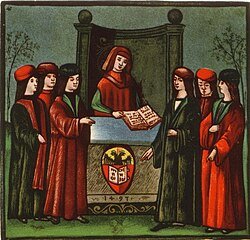
University of Bologna
Generally considered the oldest university in Europe. The teaching began around 1088, but the exact date of its founding is uncertain. After several decades, the university was granted a charter by Holy Roman Emperor Frederick I Barbarossa in 1158. It is located in Bologna, Italy. The university is famous for the study of Roman and Canon Law. Students are often hired and paid for their professions. The university attracted learners across Europe.
University of Paris
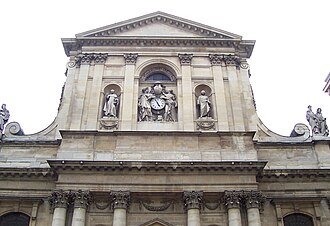
It became the leading center for theology and philosophy. It is closely connected to the cathedral schools of Paris. Scholars such as Peter Abelard and Thomas Aquinas taught or studied there. The university has a strong influence on intellectual life throughout Christendom.
University of Oxford
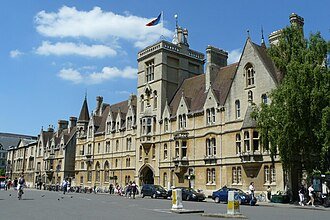
It was developed in the late twelfth century. It was modeled in part on Paris and became England’s leading center of higher learning.
It is absolutely amazing that there are people who love learning in the early eras as well. I knew those universities were old, but I’d never thought they were founded during a difficult time in Europe. My impression of early Medieval Europe was wars and plagues.
Who Attended Medieval University?
Then I got very curious: who was really able to attend a medieval University? There are some things I noticed while investigating many theologians, such as Augustine and Aquinas. Both were engaged in teaching at a medieval university somewhere. This is due to my lack of knowledge in Christianity, I’ve thought that many Church authorities were only from the church. Contrary to my presumption, the Church and the education system in Europe were closely connected.
Although universities were not attended by everyone in the modern era. Most students were male and came from specific social groups. Until the last 100 years, it was uncommon for women to attend university. The most Tier 1 university allowed only males to attend.
The largest group consisted of men preparing for careers in the Church. Many students were monks or friars who intended to become priests and worked in cathedral administration. Later, I will discuss how Chinese universities operate, but the government and universities are often closely connected.
Sons of Nobles
Some noble families sent younger sons to university. This is similar to what I’ve been observing with monasteries. The eldest son often inherited family lands. The younger sons might pursue careers in the Church, law, or government. A university education provided a path to influence and status. This continues into recent eras. I’ve seen these career paths for noble families in England from Jane Austine’s book. An example will be Edward from Sense and Sensibility.
For a younger son of a noble family:
| Path | Goal |
| Monastery | Religious life, scholarship, and administration |
| University | Law, theology, government service |
| Military | Knight or soldier |
| Court Service | Administration and diplomacy |
Many medieval scholars moved between monasteries and universities. A monk might study at Paris, return to his monastery, and then later teach at a university. In fact, some of the greatest university professors, such as Thomas Aquinas and Bonaventure, were members of religious orders.
This is one reason medieval universities feel different from modern ones. They were not primarily designed to train workers for private industry. Their main purpose was to educate clergy, theologians, lawyers, and administrators for both the Church and society.
For someone living in the fourteenth century, a university education was less like attending a modern state university and more like joining an international community of Latin-speaking scholars supported by a mixture of the Church, patrons, colleges, and personal sacrifice.
Urban Middle Class
A growing number of students actually came from the urban middle classes, such as merchant families, wealthy craftsmen, and town officials. These families needed educated men for administration, commerce, and law. This information surprised me, but it made sense. I assume that the foundation of education had already been established when the printing press came into Europe, which created a massive advancement.
Poor Scholars
Some students still lived in poverty. This did not really surprise me either. I expected education at any period to be luxurious. This is the case for the modern period as well.
Contemporary accounts describe students sharing rooms, borrowing books, living on church charity, and taking odd jobs while studying. This contributed to the stereotype of the wandering medieval scholars.
Many students paid fees, but not always in the way we think of tuition today. At places like the University of Bologna, students often paid for their master’s directly. In fact, Bologna was famous because students organized themselves into associations and essentially hired professors. I’ve had clients who were doctors or even hair stylists, where the system is that customers paid them, and they use the facility usage to the hospital or Salon owner.
At the University of Paris, the system was somewhat different. Many masters were supported through church positions, cathedral schools, or benefices, reducing the need for direct student payment. Yet, students still had expenses such as lodging, food, books and writing materials, examination fees, university fees, and clothing suitable for students. For many students, living costs were a bigger burden than instructional fees.
The system itself is not that different from our current era. Many graduate or PhD students do this at modern universities. They give lectures to undergraduate students for some part of the tuition.
Were universities government-funded?
I was curious about this. When education systems are founded by governments or companies, there is a sudden surge of motivation on their part. From my understanding, there are some types of founding, but not in the modern sense. There is no medieval equivalent of a state-funded university system. Universities were usually supported by a mix of the church, Kings and princes, and wealthy benefactors.
The Church
The Church was the largest sponsor of education. Many universities originated from cathedral schools, monastic schools, and church institutions. Also, the church founded professors, infrastructures such as buildings, and endowed positions.
When educational institutions were founded by the Church, how much freedom did researchers and professors have? I do not know much about the entertainment industry, but when you have sponsors, they will be restricted to what they can do in daily life. For example, you will be using their sponsor’s goods extensively. Does the restriction prevent some scientific advancements? These are topics I may have to investigate in the future.
Kings and Princes
Rulers sometimes granted charters, legal protections, tax exemptions, and financial privilege. However, they are rarely founded universities the way governments do today. For many countries, universities are often founded by the state. Presumably, our taxes should fund our institutions so they better reflect our voices in the University’s use of those funds.
There are benefits in them as well. When I was in Coburg, Germany, I found out that Prince Albert, who married Queen Victoria, funded a lot for the research facilities. There is something that amazes me about the researchers England brought everywhere to observe plants and other societies outside their countries. And this definitely laid the foundation for science as we know it today.
Wealthy Benefactors
Nobles, bishops, and wealthy merchants sometimes donated money to create colleges, scholarships, and student housing. This became increasingly common after the 1200’s
Merton College
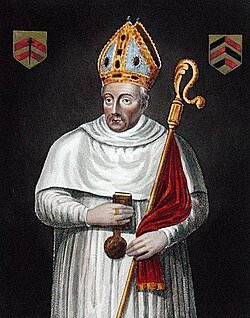
Merton College was founded by Walter de Merton. Meroton is important because it helped establish the residential college model. Its endowment provided selected students and fellows with housing, meals, financial support, and a scholarly community. Instead of students finding lodging wherever they could, they could live and study together under a set of rules. And, this became a model for later colleges at Oxford and Cambridge.
The Sorbonne
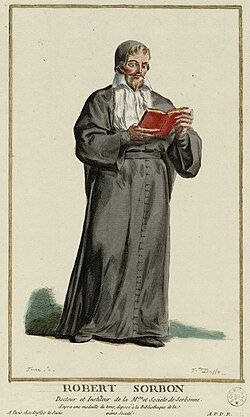
The Sorbonne University was founded around 1257 by Robert de Sorbon. This is one of the best examples of a medieval scholarship institution. Its purpose was specifically to help poor theology students. Students received housing, meals, access to books, and financial assistance. The college became so famous that eventually “Sorbonne” became synonymous with the University of Paris itself.
Exeter Collge
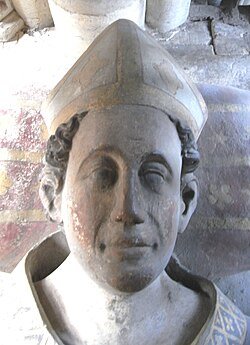
Exeter College was founded by Walter de Stepledon. The goal was to support students, especially those from Devon and Cornwall. This is an example of a bishop funding education for promising young men from his religion.
Merchant Foundations
Not all benefactors were nobles or clergy. As European cities grew wealthier, merchants began sponsoring education. A successful merchant might endow a scholarship, pay for a student residence, leave money in a will, and fund a library.
There are partially religious reasons. Medieval Christians believed charitable giving could benefit both society and their souls. Funding education was considered a worthwhile charitable act.
Comparison with Imperial China
Imperial China also had Educational institutions such as Taixue; although, there’s an interesting difference. This university was established in 3 AD. It is so old, eh. In Europe, the support often came from Bishops, Kings, Nobles, and Wealthy merchants through endowed colleges and scholarships. In China, support often came through family resources, clan support, local patrons, and government stipends for successful examination candidates. Despite differences in mechanisms, the goal was similar. Enable talented students to devote time to study.
A Connection to the Name of the Rose
In the book, there is a part where Brother William has friends, one of whom suggests William of Ockham. For scholars such as William of Ockham, Thomas Aquinas, or other university masters, it’s easy to imagine them simply appearing in Paris or Oxford.
In reality, many students depended on institutions, patrons, religious orders, or benefactors to make education possible. A poor student with talent might rise through local school, scholarship, or church support; university study; teaching; or ecclesiastical office. Yet, that path wasn’t open to everyone. Although it was more accessible than I assumed.
In fact, if you had been born a bright but poor boy in thirteenth-century Europe, there is a decent chance that a monastery, bishop, or college foundation might have spotted your academic ability and supported your education. Medieval society was highly unequal, but universities did create one of the few routes by which talent could sometimes overcome birth.
I think this system either carried over from the past, or we never changed it.
What Language Were Lectures Given In?
I guessed it. The language used was Latin. Virtually all university instruction was conducted in Latin. And, this is surprisingly efficient. The students from various countries all over Europe. The native tongues can be different. Anyone who understands Latin could attend the same lecture because Latin served as a common scholarly language.
The students arriving in Paris from England would hear lectures, read books, write examinations, and debate entirely in Latin. This explains why medieval scholars could move relatively easily between universities. The intellectual world of Europe functioned as an international Latin-speaking community.
Final Thought
When I was learning about Notable thinkers, I realized many religious figures often came from a university. Can you imagine if Europe had an institution capable of producing such great thinkers? I would have to check it out. Universities are not that related to The Name of the Rose.
Although it popped into my mind multiple times while I was learning about Augustine or Aquinas. I decided to investigate the medieval university because I was curious. I already knew that some universities are old, which is very different from Japanese History.
Some books come to mind when I think back to my time at the university. In Babel, R.F. Kuang has a protagonist who attends Oxford University. In The Name of the Wind by Patrick Rothfuss, the protagonist received a scholarship. Those are non-fiction books, but they came to mind when I was learning about the University.
I also learned that Latin was used extensively for Education. It also allowed many people across Europe to gather and train their intellects. Was I thinking that English is becoming the function in the modern era? This is something I may need to investigate in the future.
This content is restricted to site members. If you are an existing user, please log in. New users may register below.