One of the things that makes historical fiction so interesting is this strange tension:
What is real, and what only feels real?
When I started reading The Name of the Rose, I realized very quickly that I couldn’t just follow the mystery. There was something deeper happening beneath the surface, something historical, something theological, and maybe even political.
So I decided to narrow my focus.
Instead of trying to understand everything at once, I started with one question:
Did Christ actually own property?
And why would that question cause so much trouble?
That became my starting point for this research session.
Step 1: What I Recognized (Before Research)
Before opening any sources, I tried to map what I already knew.
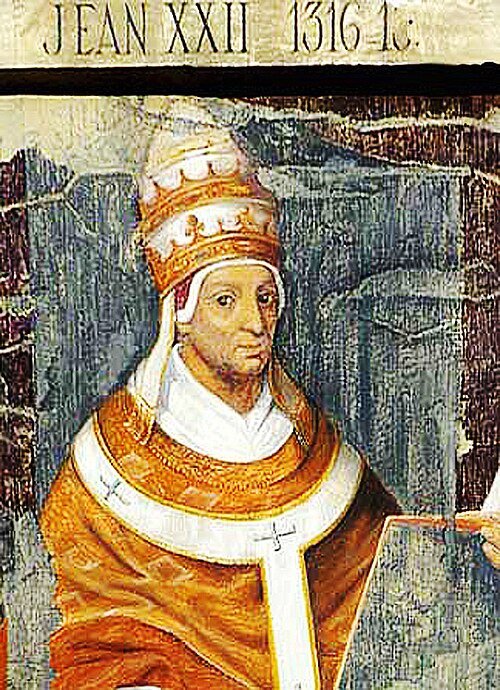
- Pope John XXII was real, and he ruled from Avignon
- The Franciscan Order existed
- Names like Ubertino of Casale, Michael of Cesena, and William of Ockham were not fictional
- Thinkers like Aristotle, Thomas Aquinas, and Augustine of Hippo were clearly part of the intellectual background
At the same time, characters like William of Baskerville felt… different.
He interacts with history, but he doesn’t quite belong to it.
So already, the novel is mixing layers:
- real people
- fictional observers
- real conflicts
That’s where things get interesting.
Step 2: Going Back to the Source (The Bible)
To answer the question about poverty, I went back to the text itself, the Bible.
Two passages stood out:
- “The Son of Man has nowhere to lay his head” (Matthew 8:20)
- “Take nothing for the journey” (Luke 9:3)
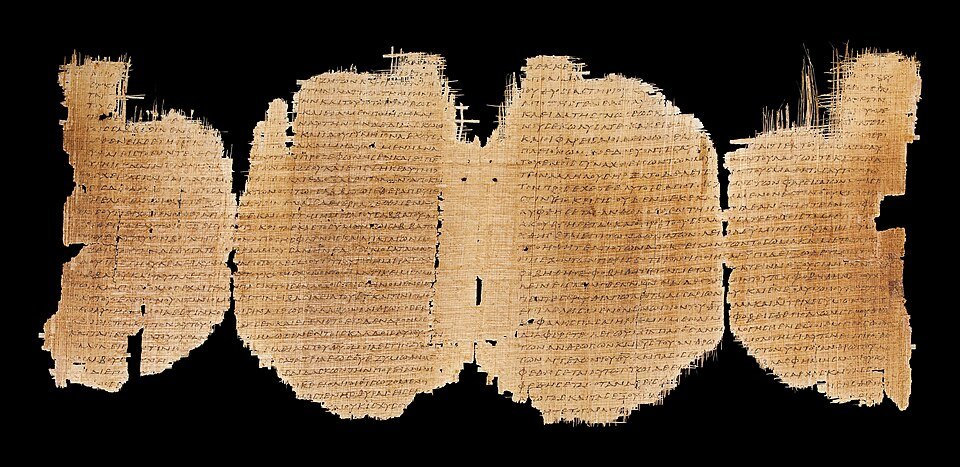
These lines clearly suggest a life without possessions.
But here’s the problem:
They suggest it, but they don’t fully define it.
Do they mean:
- No personal property?
- No shared property?
- Or just a temporary way of living?
That ambiguity turns out to be the entire problem.
Step 3: The Three Interpretations (Where Things Start to Split)
As I kept reading, I noticed that people in the Middle Ages didn’t agree on what those passages meant.
They basically formed three camps:
1. Radical Position (Spiritual Franciscans)
Christ and the Apostles owned nothing at all, neither individually nor collectively.
2. Moderate Position
They used things, but technically owned nothing; ownership belonged to the Church.
3. Papal Position (under John XXII)
Christ and the Apostles could own property, at least in common.
At first glance, this sounds like a small theological detail.
It’s not.
Step 4: Why This Becomes Dangerous
If Christ owned nothing, then a very uncomfortable question appears:
Why is the Church wealthy?
And that question is not just philosophical, it’s political.
Because the Church is not just a spiritual body.
It controls land, wealth, and influence.
So suddenly, this debate about poverty becomes a challenge to authority itself.
Step 5: The Franciscans and the Ideal of Poverty
The Franciscan movement began with Francis of Assisi, who came from a wealthy background but chose radical poverty.
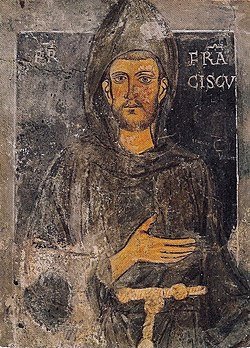

Franciscans – Wikipedia

That idea becomes the core of the order:
- no ownership
- no accumulation
- imitation of Christ
At first, the Church tries to manage this.
There’s even a compromise under Pope Nicholas III:
- Franciscans can use goods,
- but ownership technically belongs to the papacy
This is clever, but also unstable.
Because it solves the legal problem…
without solving the contradiction.
Step 6: When the Conflict Explodes
By the late 1200s and early 1300s, a stricter group emerges, the “Spiritual Franciscans.”
They push the idea further:
- Christ owned nothing
- Therefore, the Church should not be wealthy
- Therefore, the Church has betrayed Christ
Now the debate is no longer about interpretation.
It becomes an accusation.
Step 7: Enter John XXII
This is where John XXII steps in.
From his perspective, this doctrine is dangerous:
- It challenges Church authority
- It risks political instability
- It could even undermine his legitimacy
So he responds strongly:
- 1322: rejects the idea that absolute poverty is required
- 1323: declares the belief that Christ owned nothing as heretical
That’s a turning point.
Because now:
- A theological idea becomes a crime
- A disagreement becomes punishable
Step 8: From Theology to Politics
At this point, something shifts.
Franciscan leaders like Michael of Cesena and William of Ockham resist.
Some even align with Louis IV.
Now the conflict is no longer just about poverty.
It becomes:
- Church vs dissenters
- doctrine vs power
- papacy vs empire
Step 9: Where The Name of the Rose Sits
And this is exactly where the novel is placed.
Around 1327.
Not at the beginning of the debate.
Not at the end.
But at the moment when:
- The arguments are still happening
- The danger is already real
- Suppression is about to fully arrive
Step 10: What We See in the Monastery
When I went back to the novel after this, the monastery felt completely different.
It’s no longer just a setting.
It’s a compressed version of the entire conflict:
- debates about poverty are still active
- Papal representatives and Franciscans are still arguing
- The Inquisition (like Bernard Gui) is already present
- Fear is no longer theoretical; it’s enforced
This is the last moment where ideas are still alive…
before they start being crushed.
Where I Am Now (For This Phase)
At this point, I’m not trying to conclude anything yet.
I’m just mapping:
- The question (Did Christ own property?)
- The interpretations
- The escalation into conflict
- How the novel sits inside that moment
Next, I want to go deeper into something else I noticed:
Why is knowledge—especially books—treated as dangerous in this world?
Because I’m starting to suspect that poverty is only one layer.
There’s another conflict underneath it.
And it might be even more dangerous.